| |
New options for
arthritic agility dogs...
 Agility
dogs are remarkable athletes. They can accelerate, turn, jump, weave, land and
rebalance in fractions of a second. Their joints, tendons, muscles and nervous
system work together with extraordinary precision. But, just like human
athletes, they can develop wear, tear, inflammation and injury over time. One of
the most common problems we see in active and agility dogs is osteoarthritis. In
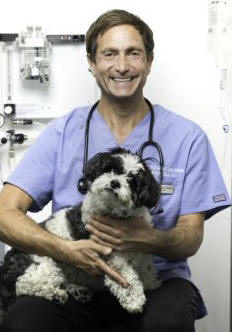
the first of several articles written exclusively for Agilitynet, Dr. Stewart Halperin, founder and clinical director of Stem Cell Vet, explains how stem cell
therapy has transformed the way we can treat arthritis in dogs to improve their
quality of life and extend their agility career. Agility
dogs are remarkable athletes. They can accelerate, turn, jump, weave, land and
rebalance in fractions of a second. Their joints, tendons, muscles and nervous
system work together with extraordinary precision. But, just like human
athletes, they can develop wear, tear, inflammation and injury over time. One of
the most common problems we see in active and agility dogs is osteoarthritis. In
the first of several articles written exclusively for Agilitynet, Dr. Stewart Halperin, founder and clinical director of Stem Cell Vet, explains how stem cell
therapy has transformed the way we can treat arthritis in dogs to improve their
quality of life and extend their agility career.
Osteoarthritis can affect the elbows, hips, shoulders, stifles, hocks, wrists or
spine. Sometimes the signs are obvious - lameness, stiffness, slowing down,
knocking poles, refusing jumps, or struggling with tight turns. But often the
early signs are subtle. A dog may simply become less enthusiastic, take longer
to warm up, lose confidence on the course or seem 'not quite right.'
For
many years, arthritis management relied mainly on rest, pain relief,
anti-inflammatory medication, weight control and physiotherapy. These are still
important. However, regenerative medicine now gives us additional options that
aim to support the joint environment more directly.
Two
of the most commonly discussed regenerative therapies are PRP and stem cell
therapy.
PRP stands for
platelet-rich plasma. It is produced from a sample of the dog’s own blood. The
platelets are concentrated and then injected into affected joints or soft
tissues. Platelets contain growth factors and signalling molecules that can help
modulate inflammation and support tissue repair processes. In arthritic joints,
PRP may help improve comfort and mobility, particularly when used as part of a
wider treatment plan.
-
Stem cell therapy uses regenerative cells usually obtained from the dog’s
own fat tissue. These cells are processed and later implanted into the
affected joints. Stem cells appear to work largely by sending out
anti-inflammatory and repair-supporting signals, rather than simply
'becoming new cartilage.' This is an important distinction. The aim is not
to promise regrowth of a perfect joint, but to improve the biological
environment inside the joint.
Treatment
At Stem Cell Vet, treatment often involves a careful assessment
first: gait evaluation, orthopaedic examination, review of history, and
sometimes diagnostic imaging. This matters because an agility dog with
'arthritis' may also have elbow dysplasia, hip dysplasia, cruciate disease,
shoulder instability, tendon problems, spinal pain or compensatory muscle
issues. The better we understand the whole dog, the better we can design the
treatment plan.
Regenerative treatment may also be combined with other joint-supporting
therapies, such as hyaluronic acid, polyacrylamide hydrogel, or other intra-articular
options, depending on the individual case. Rehabilitation, controlled
strengthening, bodyweight management, nutrition, and sensible return-to-sport
planning remain essential.
 For
agility dogs, the goal is not simply to 'get them back competing' as quickly as
possible. The goal is to help them move comfortably, preserve long-term joint
health, and make fair decisions about what level of activity is appropriate.
Some dogs may return to agility. Others may need modified training, lower jump
heights, fewer runs or a shift into lower-impact activities. For
agility dogs, the goal is not simply to 'get them back competing' as quickly as
possible. The goal is to help them move comfortably, preserve long-term joint
health, and make fair decisions about what level of activity is appropriate.
Some dogs may return to agility. Others may need modified training, lower jump
heights, fewer runs or a shift into lower-impact activities.
At
Stem Cell Vet, our work focuses on treating dogs with arthritis and mobility
problems using regenerative and intra-articular therapies. These treatments are
not a magic cure and they cannot turn an arthritic joint back into a brand-new
one. But they may help reduce inflammation, improve comfort, support joint
function and, in many cases, help dogs regain a better quality of movement.
Here's the most important message
Slowing down is not always just ageing, and reluctance is not
always behavioural. Pain can be quiet. If your agility dog is showing changes in
performance, enthusiasm or movement, it is worth investigating early.
Regenerative medicine offers exciting new options for arthritic agility dogs,
especially when used responsibly as part of a complete, evidence-informed
mobility plan. For many dogs, it can be another way to help them stay
comfortable, active and enjoying the life they love.
|
Dr Halperin would
be happy to host a free live webinar for the agility community with
an open Q & A session at the end to get all your questions on
arthritis answered |

Author credit...
Dr Stewart
Halperin BVMS MRCVS is a veterinary surgeon and the
founder of Stem Cell Vet, an expert veterinary service dedicated to helping dogs
with arthritis, joint pain and mobility problems. Stem Cell Vet sees dogs from
all over the UK who need help with arthritis, mobility and joint issues.
His interest in canine
arthritis began in a deeply personal way after losing his first dog, Benji, to
hip arthritis, after being told by specialist vets that nothing more could be
done, an experience that shaped his determination to find better ways to help
dogs stay comfortable, active and enjoying life for as long as possible.
Through Stem Cell Vet,
Stewart and his team focus on advanced arthritis care, using a unique multimodal
approach, including regenerative therapies such as stem cell treatment, PRP,
joint fluid replacement and tailored mobility support. Stem Cell Vet has helped
over 1,700 dogs across the UK with osteoarthritis and joint-related lameness,
with the sole emphasis on improving comfort, movement and quality of life.
He
has published three double blind peer reviewed studies on the use of stem cell
therapy in canine arthritis which can be found
here .
Stewart is passionate
about helping owners understand that stiffness, slowing down and reduced
mobility are not always 'just old age.' Even when owners have been told there is
nothing more that can be done, his view is that there is usually something more
that Stem Cell Vet can do to relieve pain, improve mobility and help our dogs
enjoy a better quality of life.
For more
information go to the Stem Cell Vet
website or email.
First published
22nd July 2026
| |
|