| |
It's not just aches and pains...
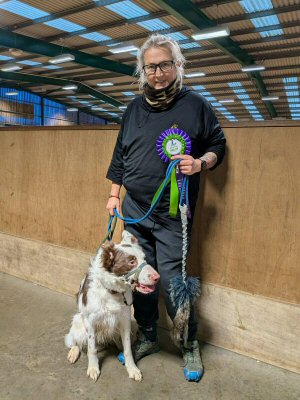 In
2026 Shellie
Smith was diagnosed with fibromyalgia, a chronic, long-term
condition that causes widespread pain all over the body. There is currently no
cure, just management. There's a common myth
that it's all in your head. Wrong. It's not imagined. The fatigue sleep
disturbances are very real. The symptoms can be changeable - better one day and
worse another. Training and
competing with a fast dog when you've got fibromyalgia can be frustrating.
Shellie shares what she's learned about doing agility with fibromyalgia and how she's coping
this far. In
2026 Shellie
Smith was diagnosed with fibromyalgia, a chronic, long-term
condition that causes widespread pain all over the body. There is currently no
cure, just management. There's a common myth
that it's all in your head. Wrong. It's not imagined. The fatigue sleep
disturbances are very real. The symptoms can be changeable - better one day and
worse another. Training and
competing with a fast dog when you've got fibromyalgia can be frustrating.
Shellie shares what she's learned about doing agility with fibromyalgia and how she's coping
this far.
Living with
fibromyalgia isn't something that just appeared out of nowhere for me. It
all started after emergency surgery for a burst appendix. What should have been
a recovery turned into something much bigger and much harder to explain.
Fibromyalgia is constant, deep, unpredictable pain, exhaustion
that no amount of sleep fixes and a body that can turn on me without warning.
Some days the pain is a deep ache in every muscle, like I've run a marathon
before I've even left the house. Other days it's sharp, unpredictable flares,
joints that don't want to co=operate and fatigue that hits like a brick wall.
Add in the brain fog, and remembering a course can feel harder than running it.
Add agility into the mix
It's not just me. It affects my dogs more than people might think. There are days I can't run like I want to. My timing can be
off. My handling isn't always as sharp because the brain fog is real-honestly, I
used to put that down to being a woman of a certain age and thought 'Here we go,
menopause' but it's more than that.
My dogs sometimes get a version of me that's managing, not
thriving.
It's
sharp turns, split-second timing,
mental
focus and physical effort. But they still give me everything. They don't judge the slower runs, the late cues or the
days I have to dig deeper just to get round a course. They meet me where I
am-and that's something special.
But I still show up. Sometimes I am
slower, sometimes sore, sometimes grumpy as I am hurting, but I keep wondering
how on earth I'm going to keep up with a adult speedy collie and a speedy puppy
collie who is faster than an adult.
And I don't just compete,
I teach, too. I'm on my feet for
around 20 hours a week, coaching, watching, supporting. Some days I'm already in
pain before I even step onto the field.
The aftermath is probably the hardest part...
After a show, recovery can be slow and really
painful-especially in my legs. What might be just a weekend of competing for
others can mean two or three days of recovery for me.
And that's when I've had
to be honest with myself. I watch my students going out to
shows, and they always say that they want me to come along. Trust me I really
want to but I have to hold back now. I can't book show after show
like I used to, because I know what it will cost me physically afterwards. And that's tough
because I want to be out there with them.
I also have a full-time job that's not agility related. Some weeks
that alone is a challenge before I've even thought about running my own dogs.
But like so many of you, we find ways to make it work.
 What
keeps me going? What
keeps me going?
Agility isn't just about speed for me. It's about partnership, adapting and
celebrating the small wins that don't always show on the results sheet.
I might not always move as quickly as
I'd like and I might have to train smarter not harder, and there are definitely
days where my body is screaming at me while I'm trying to smile at the start
line, but my dogs don't care. They just show up, ready to run, full of joy, and
that pushes me to do the same.
I've learned to:-
-
Break training into shorter sessions
-
Listen to my body even when I don't
want to
-
Focus on communication over speed
-
Celebrate the small wins
-
Forgive the tougher days
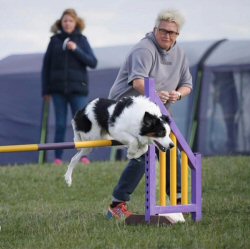
Running a fast collie now with
fibromyalgia isn't always a pretty sight. Sometimes it's late cues, creative
line and a lot of 'well, that wasn't the plan.' Running my Small dog Pea
is a totally a different thing as I have to go all the way round the course
which can be a killer. It may not be pretty and can be total chaos with either,
but it's ours - and I'm proud of it.
I want to be out on the ice with my people and my
classmates from the club where I train, doing what I love, but here's the truth
I've learned. Winning isn't just about rosettes anymore.
Sometimes it's...
-
Getting to the start line
-
Teaching a full day when my body is struggling
-
Running my dog and still finding joy in it
-
Knowing when to stop, even when I don't want to
Even down to getting up early in the morning. I used
to spring out of bed for a show but not anymore.
|
|
Behind
the scenes
There are so many of us managing pain every single day yet
still showing up, running our dogs, adapting, pushing through, pacing
ourselves and celebrating the small wins. It's not always pretty. It's
not always fast and some days it's really bloody hard. But we do it
because we love our dogs, and we love agility.
If you're dealing with chronic
pain and wondering if you can still do agility… you absolutely can. It
might look different, but different doesn't mean less. It just means you
and your dog(s) are finding your own way to fly.
I also hope it's opened the eyes
of people who don't experience chronic pain. It's not for sympathy, not
for special treatment and not for recognition. We just want to do what
we can, in the way we can, without being judged for it.
So when you see us, please
remember...
|
Dog agility still gives me purpose. My dogs still give me
drive. fibromyalgia may have changed how I do many things, but it hasn't taken away why I do them. We're showing up anyway, and that takes
strength people don't always see. That's my win
 About the author... About the author...
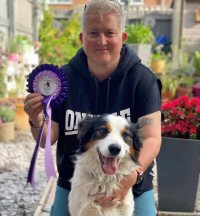
Shellie
Smith has been in the world
of dog agility for around 16 years and, for all that time, she was a proud
member of her training club CKT. In 2022, she decided it was time to take the
leap and launched her own venture, SAS Agility Training Academy.
Over the years, she's trained
five of her own dogs in agility - Marli, Riko, Freddi, Kodi and River and Marli,
a little JRT with a huge heart, took her all the way to Grade 7. Then she went
over to the dark side - Collies! Her top collie sadly had to retire early due to
injury, but she now has two exciting youngsters coming through.
At the beginning of 2026,
Shellie diagnosed with fibromyalgia, a long-term condition that causes
widespread pain all over the body.
First published 19th May 2026 | |
|